Reconciliations that keep up with the close
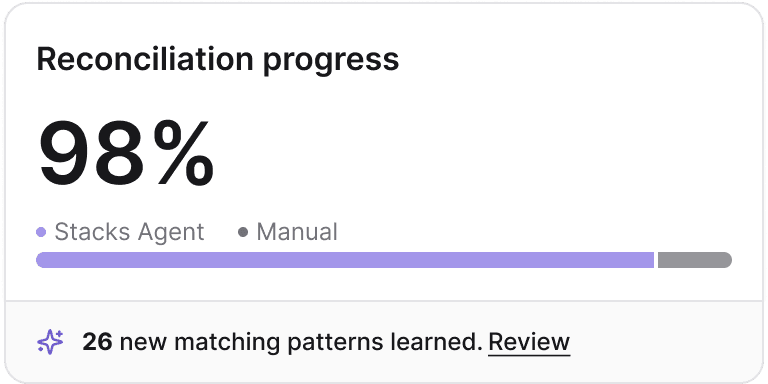
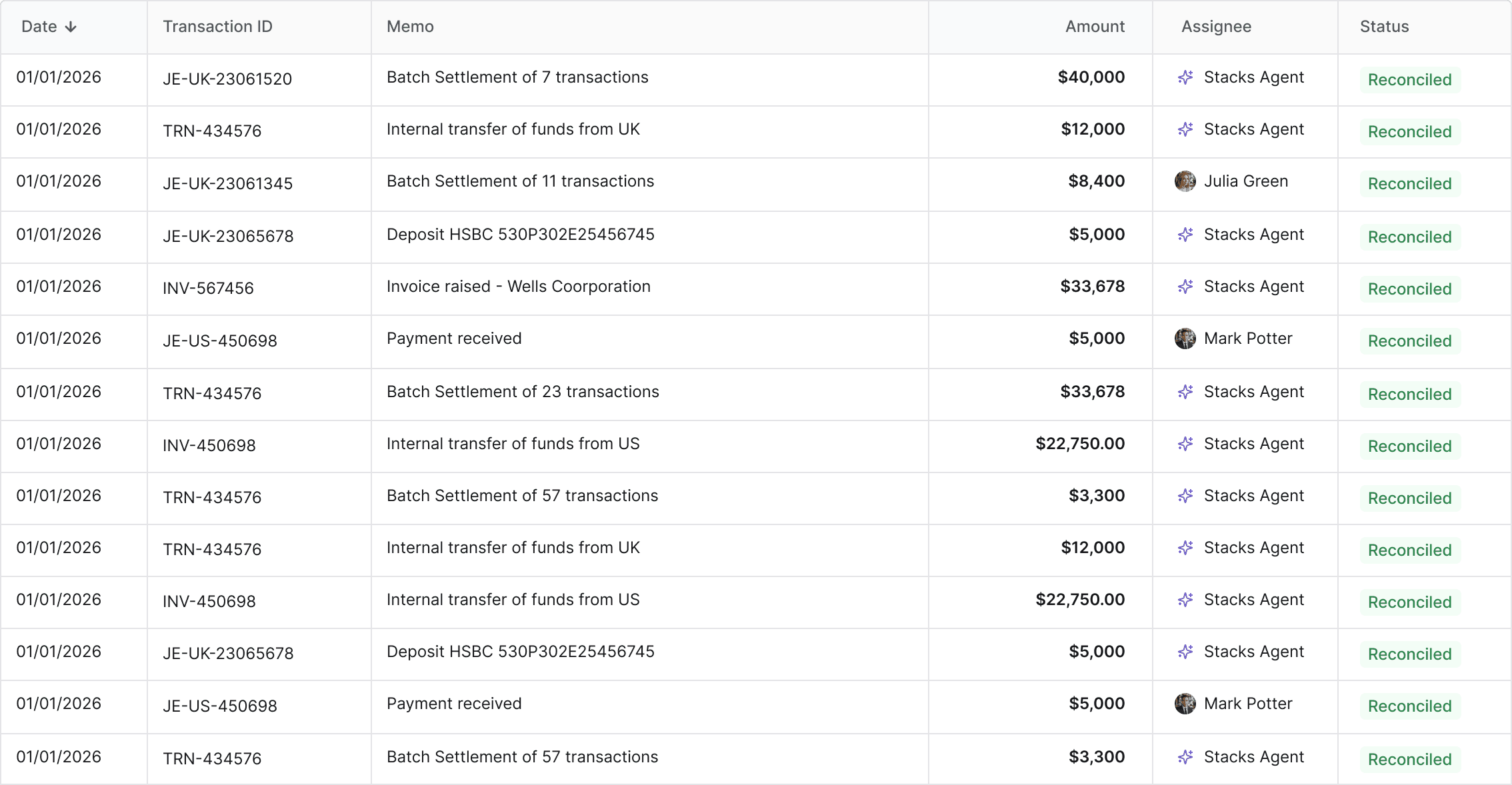
Your reconciliations run continuously against live ERP data instead of waiting for month-end exports. By day one of close, balances are matched, exceptions are surfaced, and your team starts with a prioritised worklist rather than a blank spreadsheet.
Exceptions you can actually resolve
Every unmatched item comes with its probable cause, owner, and supporting evidence already attached. Your team skips the data-gathering step and goes straight to resolution, with the same workflow handling the investigation, the correction, and the sign-off.
Audit evidence built as you reconcile
Every match, exception, and approval is logged with preparer, reviewer, and timestamp as the work happens. Your auditors get the full trail tied to balances and source records without your team assembling it at year-end.
Match faster, resolve sooner, prove it once
Match more than exact value and date
The matching engine learns from your historical matches and adapts to how your team actually reconciles: grouped transactions, split payments, rounding differences, and FX. Out of the box, match rates land above 95%, and every period the engine sees improves the next one.
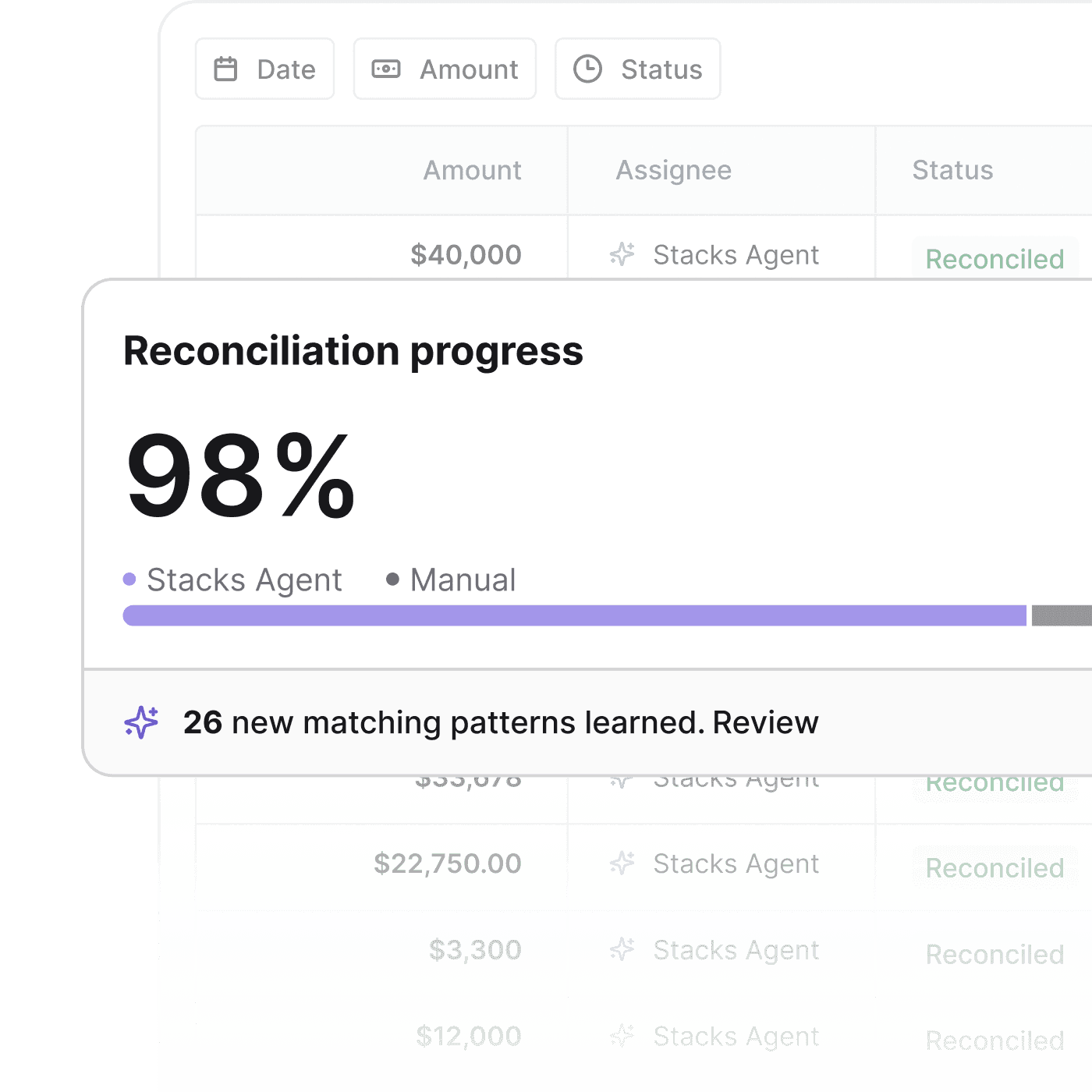
Every reconciliation for every account in one view
All accounts, balances, and reconciliation statuses sit on a single page that updates as your ERP does. Controllers see where the balance sheet stands, team leads see what's outstanding, and nothing falls through the cracks between GL screens and spreadsheets.
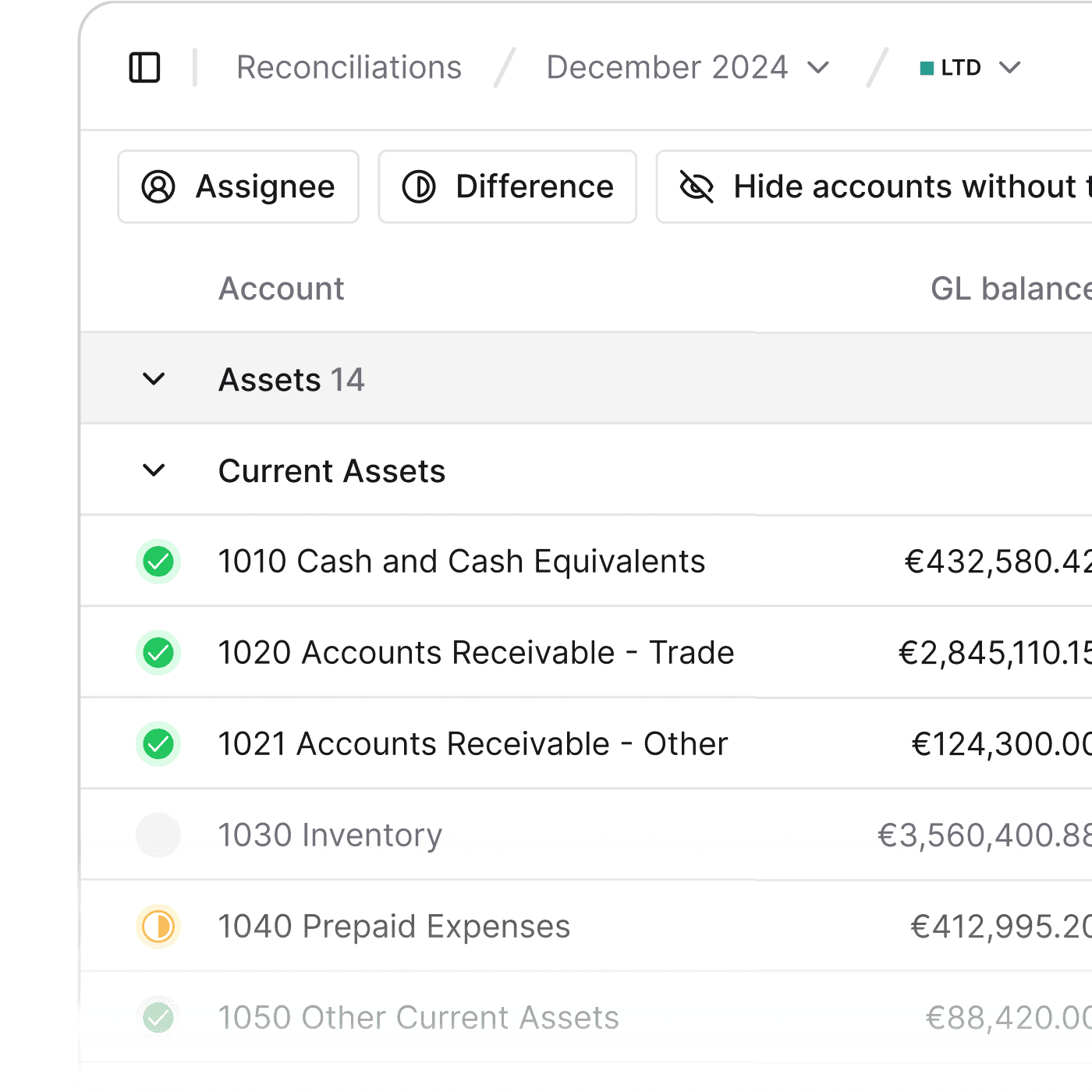
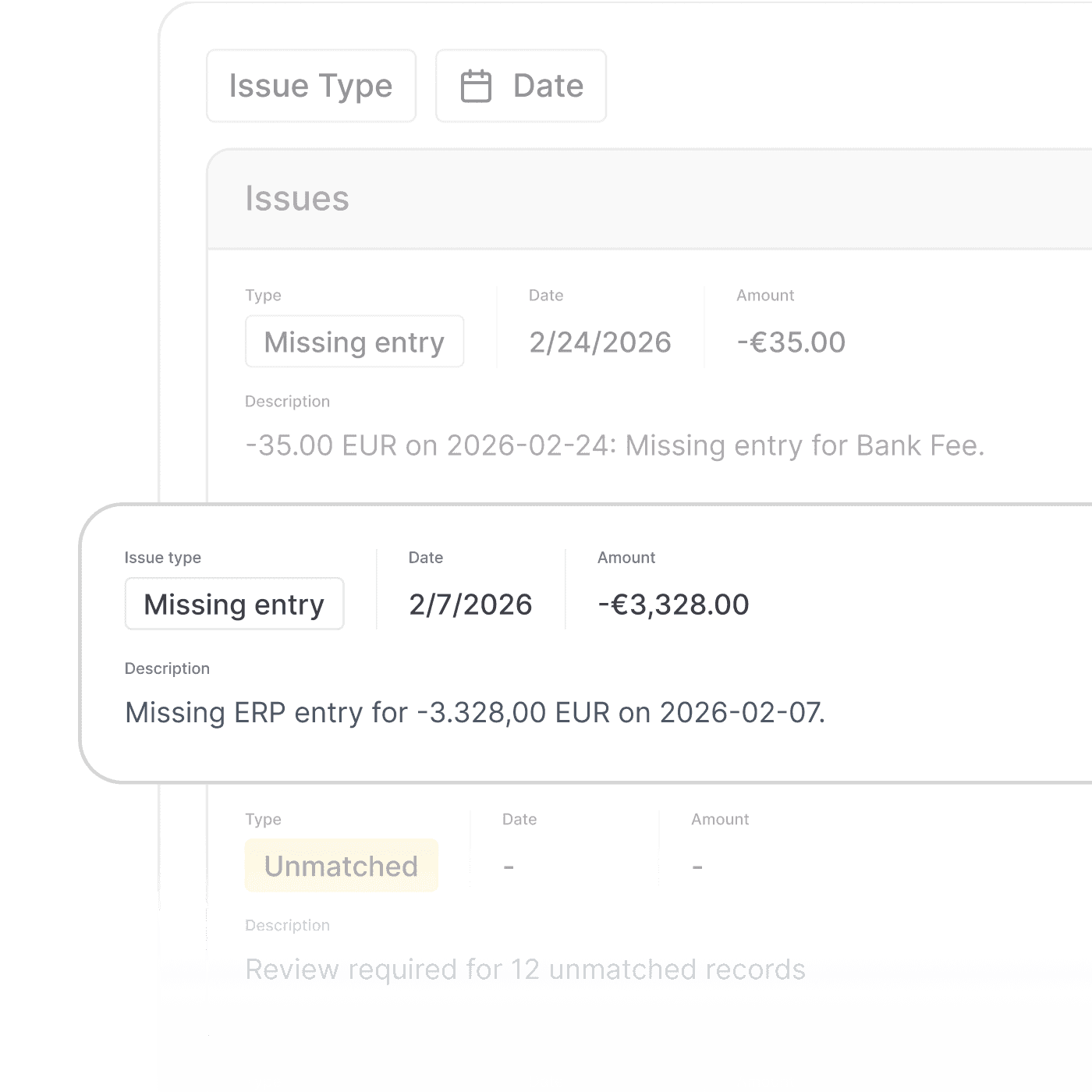
Turn every exception into a tracked work item
Unmatched items are assigned, prioritised, and surfaced with context: what the likely cause is, what's needed to resolve it, and which journal it feeds. Status, history, and evidence stay with the exception through to close, so nothing needs re-explaining next period.
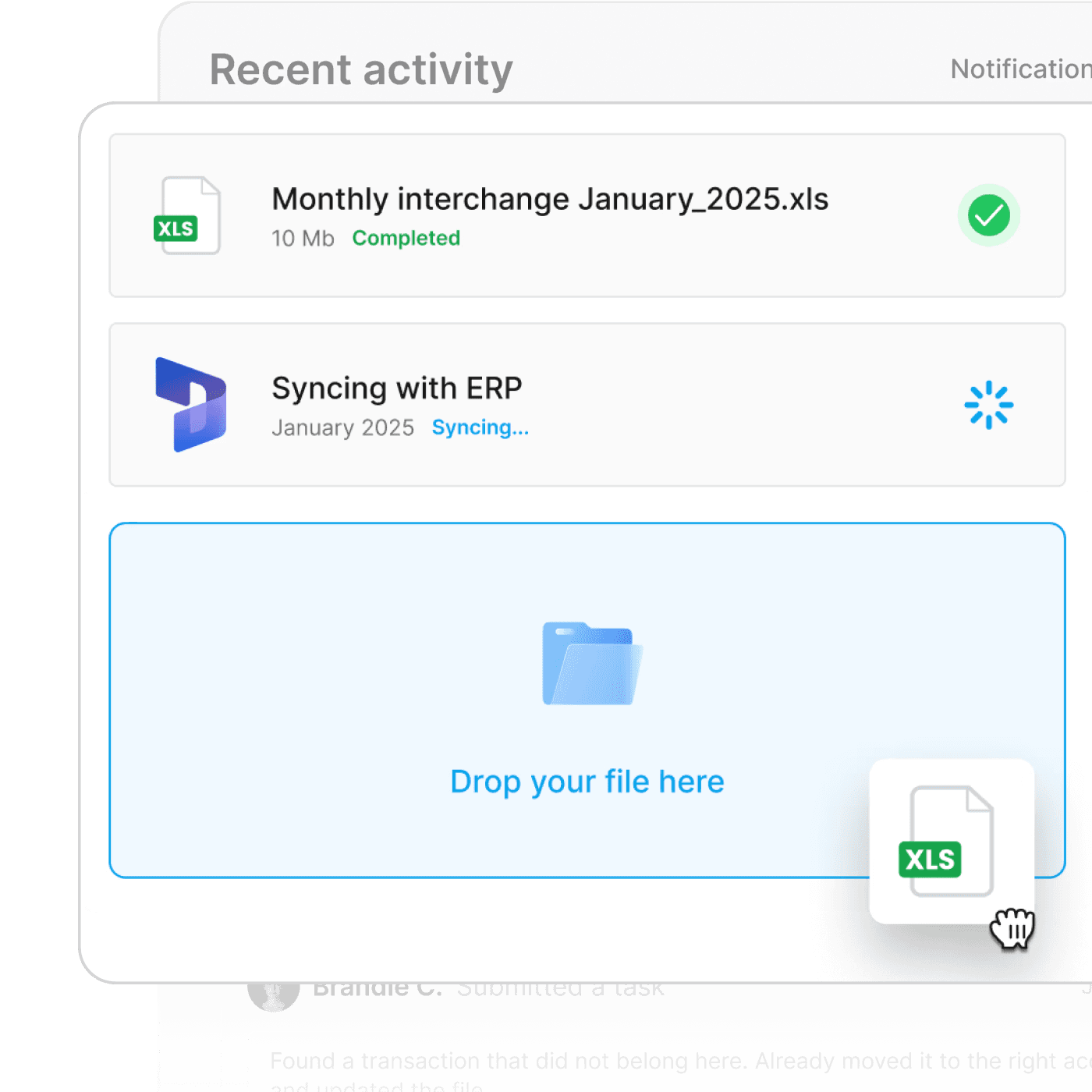
Pull data from your ERP and your source systems automatically
Stacks connects directly to your ERP at the transaction level and ingests bank statements, subledger extracts, and source-system files without reformatting. Data stays fresh in the background, so reconciliations reflect what's actually in the ledger right now.
Four steps to a clean consolidation
Connect
Stacks syncs directly with your ERP, bank feeds, and subledgers. Chart of accounts, opening balances, and historical transactions come across automatically, with no reformatting and no manual exports.
Match
Transactions are matched across sources using your tolerance rules and your historical matching patterns. Confirmed matches are documented, and everything else becomes a prioritised exception with its probable cause attached.
Resolve
Exceptions surface with context, owner, and suggested next step. Your team investigates, adds notes, attaches evidence, and drafts correcting journals: all in-platform, all logged.
Sign Off
Reviewers approve the reconciliation, the period locks, and the audit trail is already assembled. Next period's reconciliation inherits every match pattern and exception your team resolved in this one.
Why Stacks vs. Legacy Reconciliation Tools
Rule-based matching with 70–75% match rates
AI matching above 95% that improves every period
Monthly CSV exports and reformatted spreadsheets
Live ERP sync with data refreshed in the background
Exceptions listed in a report, chased over email
Exceptions tracked as work items with owner, status, and evidence
Evidence scattered across folders, inboxes, and screenshots
Supporting documents attached to the reconciliation they belong to
Reconciliation as a point-in-time task done after close
Continuous reconciliation that feeds close progress in real time
Audit prep as a separate project at year-end
Audit trail assembled as the reconciliation runs