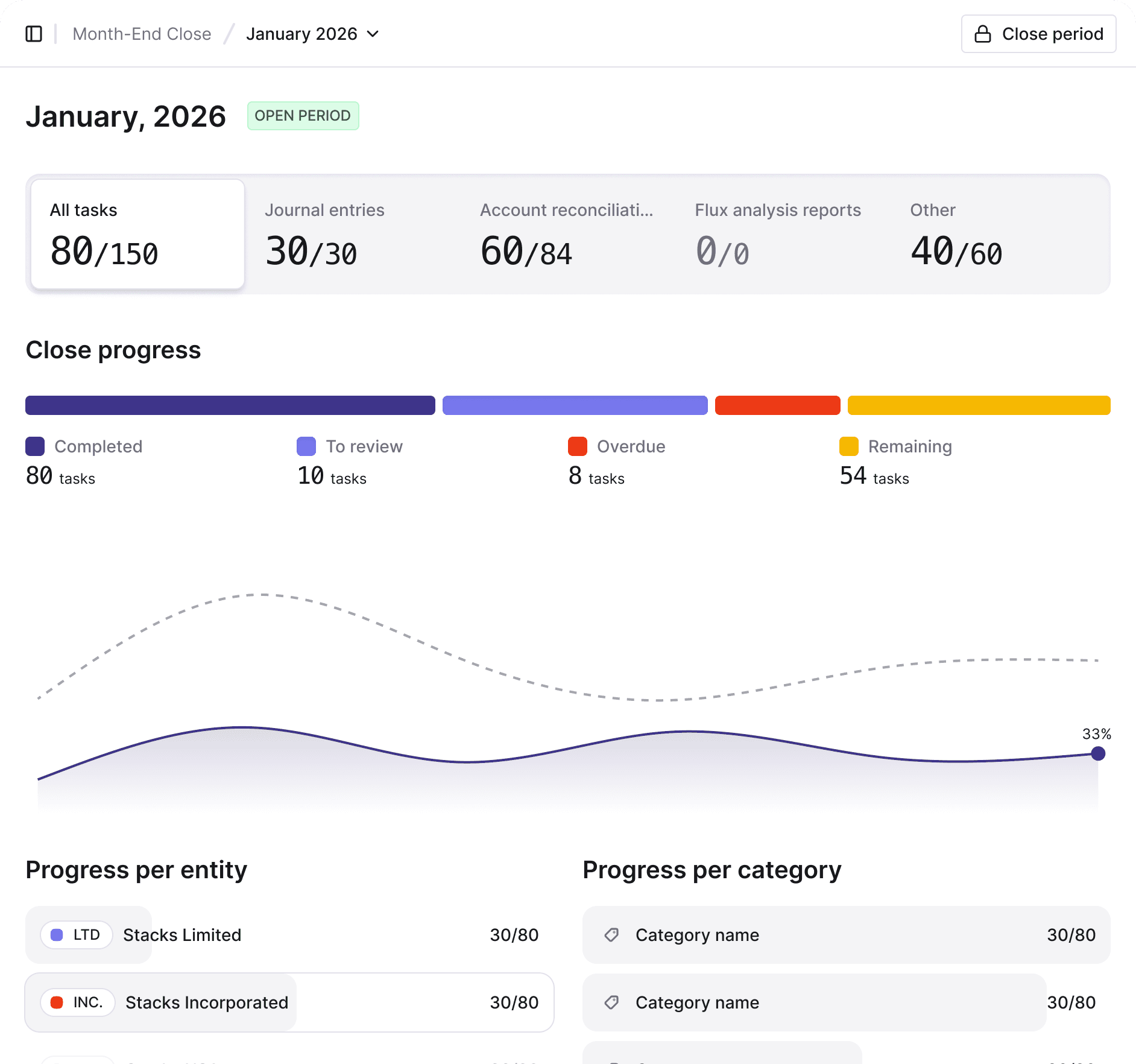
A close timeline you can actually commit to
Your close runs against a live calendar instead of a spreadsheet checklist. Bottlenecks surface while there's still time to act, workload rebalances before anyone falls behind, and the close lands on the day you said it would.
Controls built into the workflow, not layered on top
Approvals, segregation of duties, and role-based access are enforced by the workflow itself. Preparers prepare, reviewers review, and nothing posts to the GL until it's cleared the controls your policy requires.
Audit prep that happens while you close
Every task, approval, and supporting document is logged with preparer, reviewer, and timestamp as the work happens. When auditors arrive, the evidence is already assembled, already linked to the underlying balances, and already tied to the policy it supports.
Run every close the same way, only faster each time
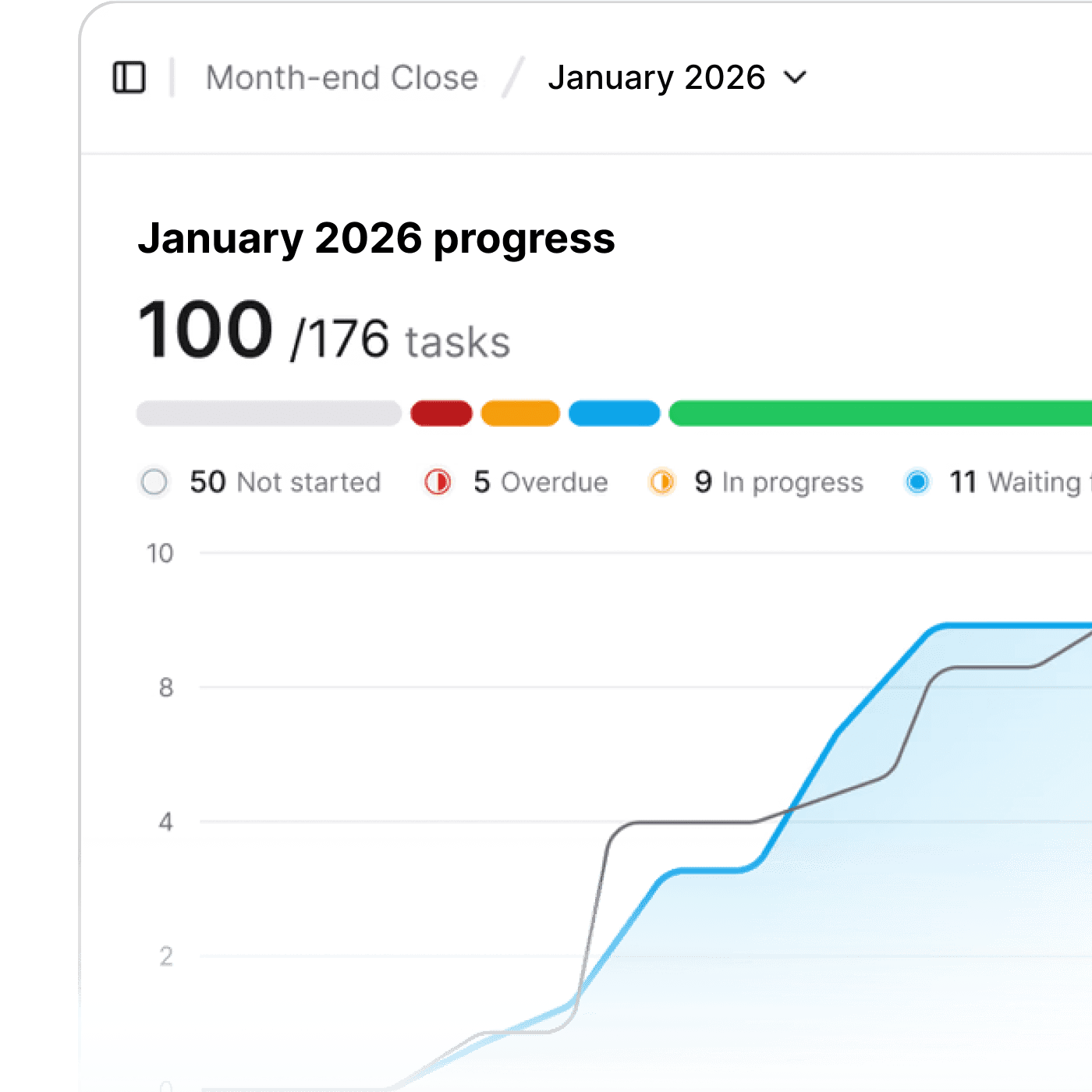
See the entire close on one timeline before day one
Every task, owner, dependency, and deadline sits on a single live calendar. Controllers see where the close stands without asking, team leads see the week ahead, and anyone waiting on an upstream task knows the moment it clears.
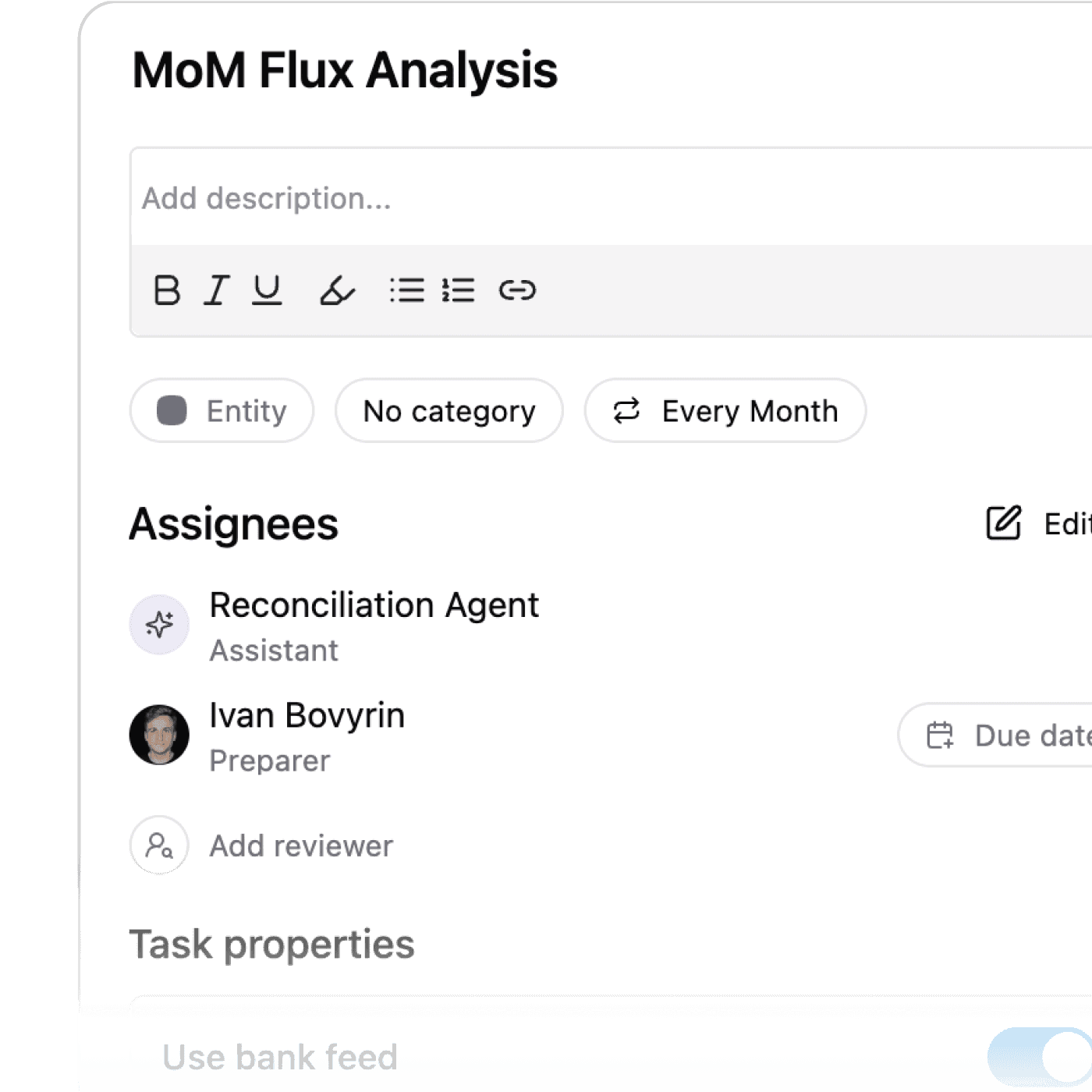
Define each close task once, run it the same way every period
Set the preparer, reviewer, supporting evidence, and linked policy for a task once, and it runs the same way every close. When something changes, you update the workflow and the next period inherits it automatically.
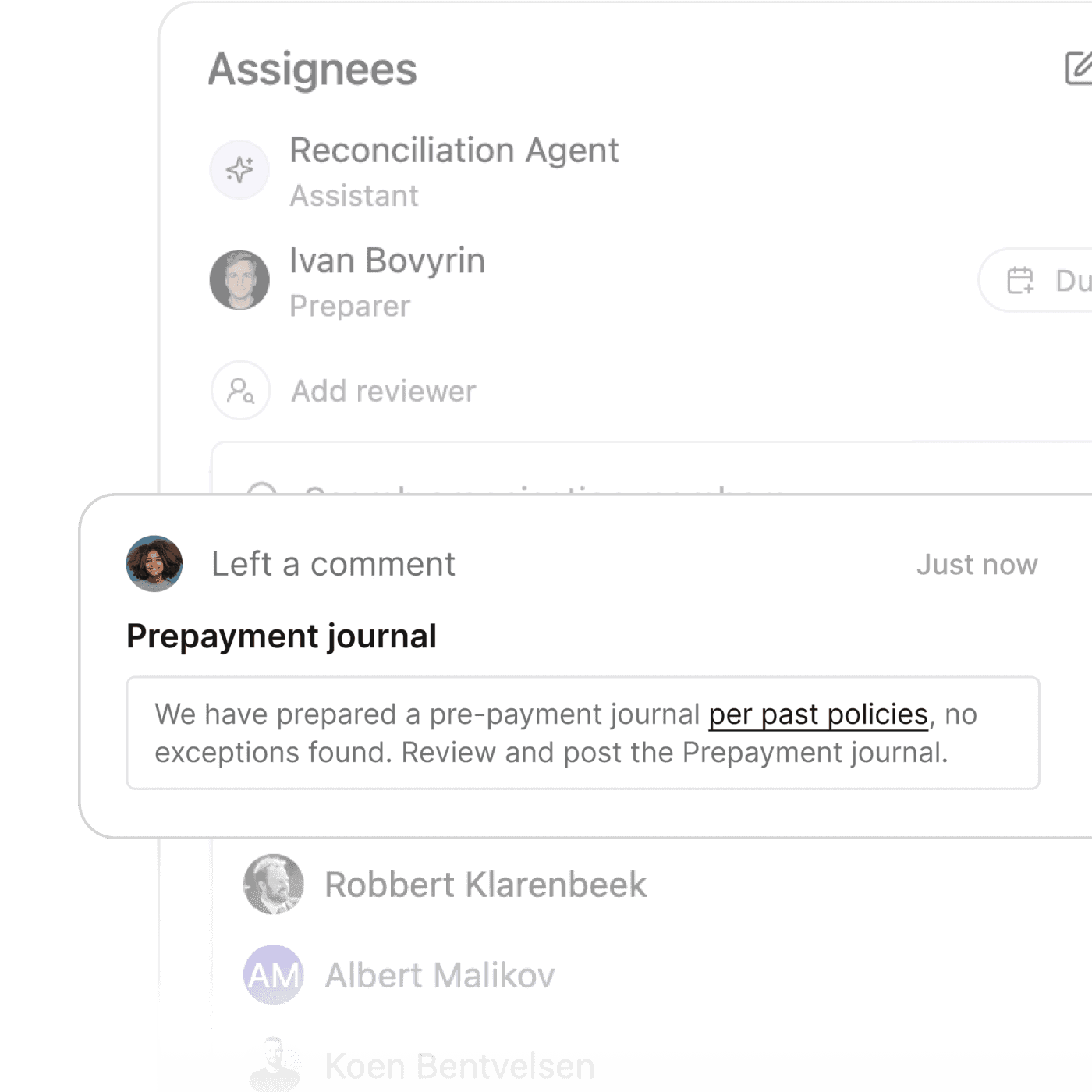
Enforce segregation of duties without chasing sign-offs
Preparer and reviewer roles are enforced at the task level, approvals route automatically, and nothing posts to the GL until it's cleared the workflow. The controls your policy describes are the controls the system actually runs.
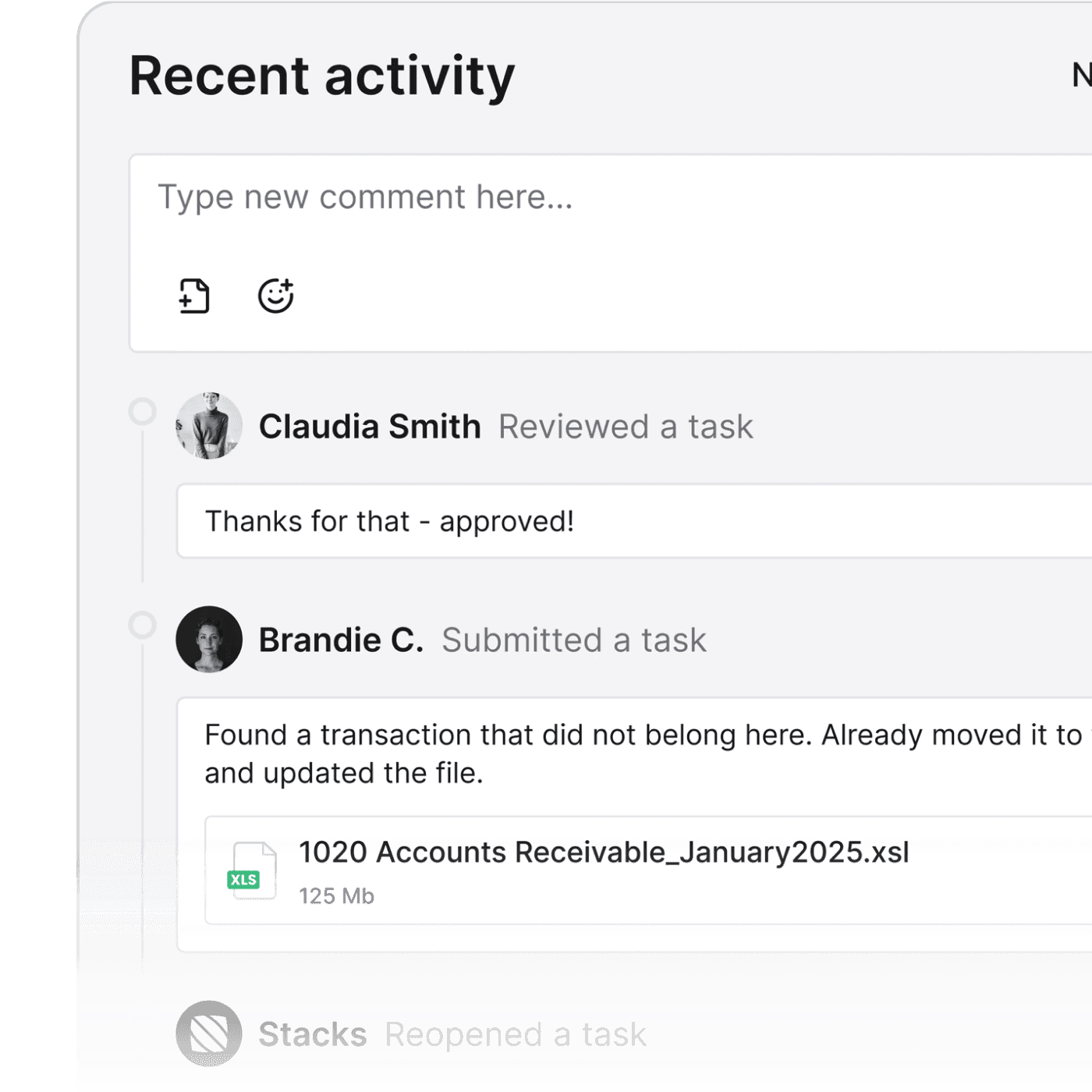
Every action logged at the moment it happens
Who did what, when they did it, and what changed is captured as the close runs: reconciliations, working papers, journals, and approvals all tied to the period they belong to. Your auditors get the full trail in a single export, without your team assembling it after the fact.
How It Works
Structure
Import your close calendar, map each task to an owner, and link it to the policy it supports. Stacks inherits your existing close structure rather than asking you to rebuild it.
Execute
Tasks open on schedule with source data, linked reconciliations, and supporting policies already attached. Reviewers are notified the moment a task is ready, not the next morning.
Control
Approvals enforce segregation of duties automatically, journals stage for review before they post, and exceptions escalate by rule. Every action is recorded as it happens.
Close & Prove
Sign-off locks the period and its evidence. The audit trail is already assembled, linked to balances, and tied to policy, and every improvement you made this close carries into the next one.
Why Stacks vs. Legacy Close Tools
Spreadsheet checklists updated by hand
Live close calendar with real-time status across every task
Approvals chased over Slack and email
Segregation of duties enforced by the workflow itself
Evidence scattered across drives, inboxes, and ERP screenshots
Every reconciliation, journal, and working paper attached to its task
Status meetings to find out where the close stands
Bottlenecks surface the moment they form
Audit prep as a separate project after close
Audit trail built continuously as the close runs
Tribal knowledge in one senior controller's head
Repeatable workflows that survive turnover and scale with headcount